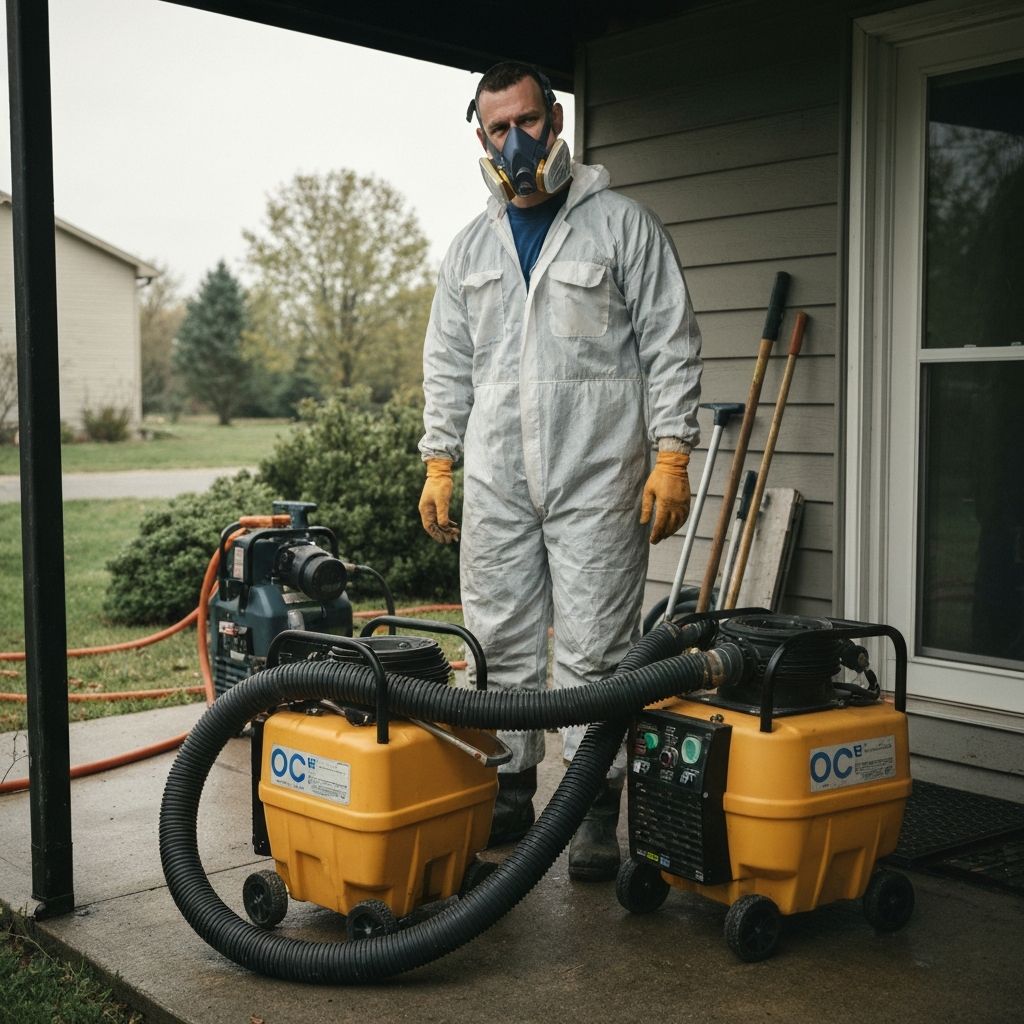
Advanced Smoke Remediation & Odor Elimination
We don't just mask odors - we eliminate them at the molecular level. Our advanced restoration protocols use cutting-edge technology and proven chemistry to permanently remove smoke damage and odors from your property.
IICRC Certified
Industry Standards
24/7 Emergency
Rapid Response
100% Guarantee
Results or Refund
Six-Stage Remediation Protocol
Our systematic approach ensures complete odor elimination, not temporary masking. Each stage builds upon the previous, addressing smoke damage at every level from visible residue to molecular contamination.
Comprehensive Assessment
Our certified technicians perform a thorough inspection using thermal imaging cameras, particle counters, and VOC (Volatile Organic Compound) meters to identify all affected areas. We map smoke penetration patterns and document the extent of damage for accurate treatment planning.
Customized Protocol Development
Based on assessment data, we develop a tailored remediation protocol. We consider smoke source (tobacco, cannabis, fire), exposure duration, material types affected, and property-specific factors to determine optimal treatment combinations and sequences.
Source Removal & Pre-Treatment
Before odor treatment, we address the source. This includes HEPA vacuuming of soot particles (0.3 micron filtration), removal of heavily contaminated materials, cleaning of HVAC systems, and application of enzyme-based pre-treatment solutions to organic residues.
Advanced Odor Neutralization
We deploy our multi-modal treatment approach: hydroxyl radical generation for occupied-safe treatment, high-output ozone for deep penetration (unoccupied), thermal fogging with odor counteractants, and ULV (Ultra-Low Volume) misting for comprehensive coverage.
Sealing & Encapsulation
Porous surfaces that have absorbed smoke compounds are treated with specialized sealers. We use shellac-based primers for severe cases and acrylic encapsulants for moderate contamination, creating a molecular barrier that prevents off-gassing.
Verification & Documentation
Post-treatment verification includes air quality testing, surface contamination measurement, and third-party clearance testing when required. We provide detailed documentation including before/after readings and treatment specifications for your records.
Typical Treatment Timeline
Day 1
Assessment & Pre-Treatment
Days 2-3
Primary Odor Treatment
Day 4
Sealing & Encapsulation
Day 5
Final Verification
*Timeline varies based on contamination severity. Light contamination may be resolved in 24-48 hours.
Understanding Smoke Contamination
Effective remediation requires understanding the chemistry of smoke. Here's what makes smoke odor so persistent and why standard cleaning fails.
What Creates Smoke Odor?
Smoke contains over 7,000 chemical compounds, including:
- Polycyclic Aromatic Hydrocarbons (PAHs) - Complex carbon ring structures that bond strongly to surfaces and resist conventional cleaning.
- Aldehydes (Formaldehyde, Acetaldehyde) - Volatile compounds that create the sharp, acrid smell and can off-gas for months.
- Nicotine & Tar (Tobacco Smoke) - Sticky resinous compounds that yellow surfaces and trap other odor molecules.
- Volatile Organic Compounds (VOCs) - Gas-phase chemicals that penetrate deep into porous materials.
- Particulate Matter (PM2.5) - Microscopic soot particles that settle into fibers, ductwork, and crevices.
Why Standard Cleaning Fails
Traditional cleaning methods address only surface contamination. Here's why they fall short:
- Surface-Level Only - Detergents clean visible residue but can't reach molecules absorbed deep into materials.
- Masking vs. Elimination - Air fresheners add fragrance molecules but leave odor-causing compounds intact.
- Temperature Sensitivity - Odor molecules release faster in warm conditions, causing "phantom" returns.
- Porous Material Penetration - Drywall, wood, and fabric can absorb odors 1/4" or deeper into their structure.
- HVAC Distribution - Contaminated ductwork re-circulates odor molecules throughout the space.
Different Smoke Sources Require Different Approaches
Tobacco Smoke
Characterized by high nicotine and tar content that creates a sticky, yellowish residue. Requires aggressive degreasing pre-treatment and often multiple ozone cycles.
Cannabis Smoke
Contains terpenes and cannabinoid compounds that create a distinctive, persistent odor. Less tar than tobacco but higher terpene volatility requires specific treatment protocols.
Fire/Combustion Smoke
Most complex contamination with soot, char, and diverse combustion products depending on materials burned. May involve protein fires, synthetic materials, or structural elements.
Our Treatment Technologies
We employ a multi-modal approach, combining multiple technologies based on contamination type, severity, and property requirements. Each technology has specific strengths.
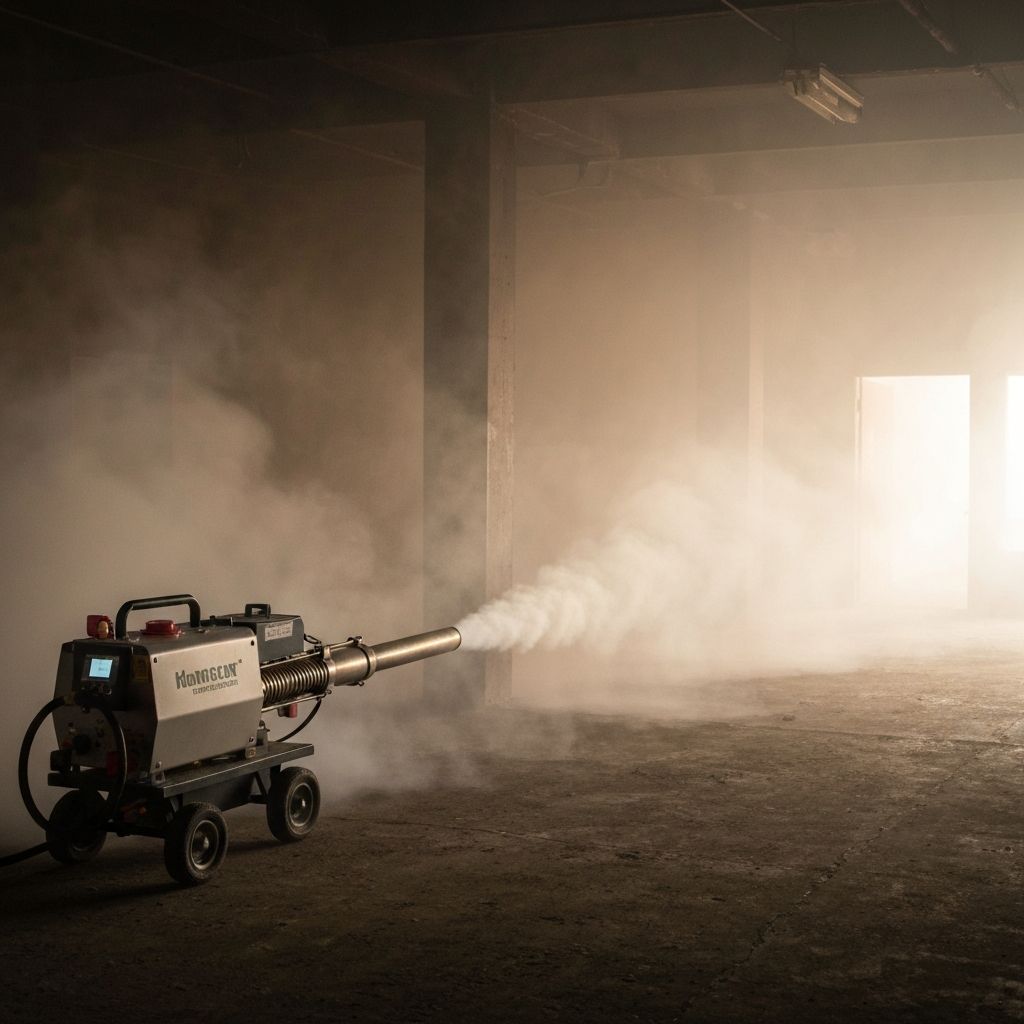
Hydroxyl Radical Generation
Occupied-SafeHydroxyl radicals (OH) are nature's most powerful oxidizers, the same molecules that clean our atmosphere. Our hydroxyl generators produce these radicals using UV light and titanium dioxide photocatalysis.
How It Works:
UV light energizes TiO2 catalysts, splitting water molecules in the air to create hydroxyl radicals. These radicals oxidize and break down odor molecules into harmless water vapor and CO2.
Best For:
- Occupied spaces requiring safe, continuous treatment
- Light to moderate smoke contamination
- Contents restoration (fabrics, furniture, documents)
- Long-term air quality maintenance
Technical Specifications:
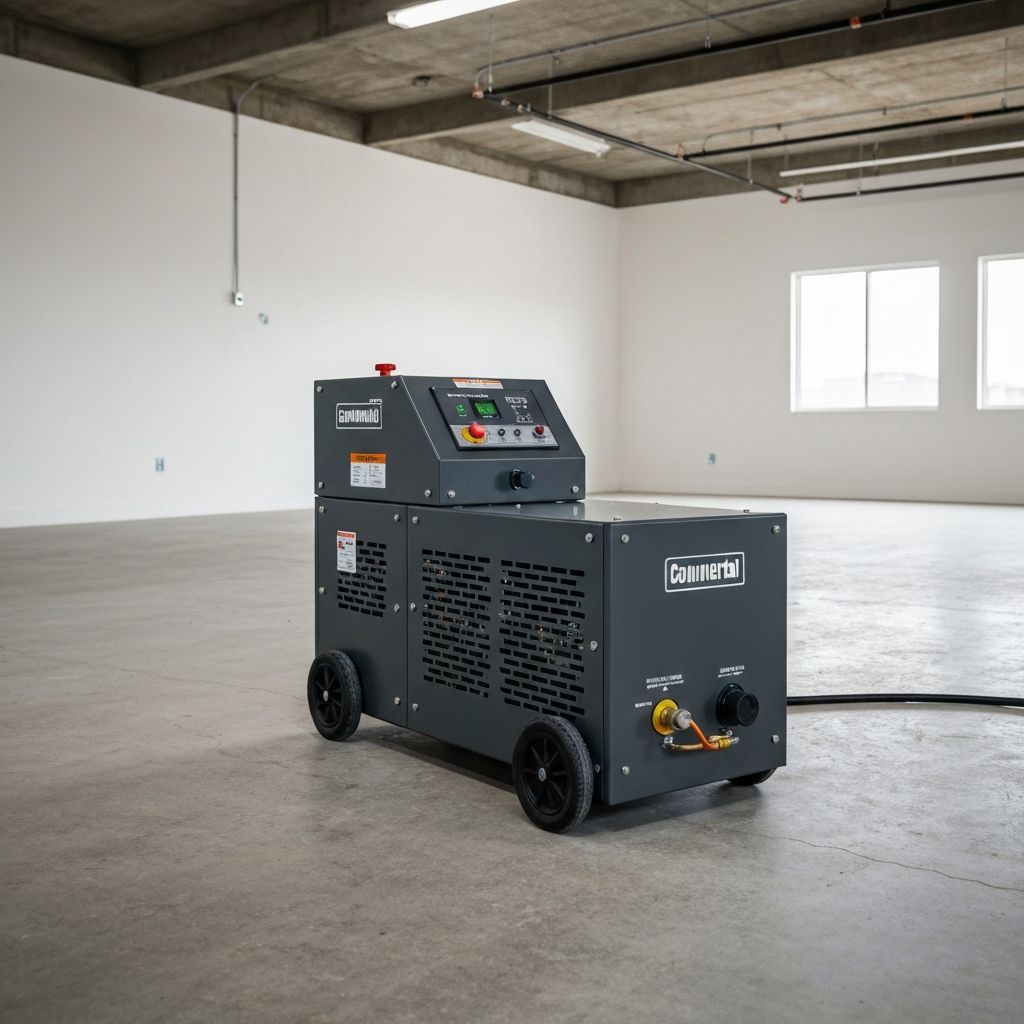
High-Output Ozone Treatment
Unoccupied OnlyOzone (O3) is a powerful oxidizing agent that penetrates where other treatments cannot. Our commercial-grade generators produce controlled ozone concentrations to oxidize embedded odor molecules.
How It Works:
Corona discharge units split O2 molecules, creating unstable O3 that seeks to donate its third oxygen atom. This oxidation breaks molecular bonds in odor compounds, fundamentally altering their chemical structure.
Best For:
- Severe smoke contamination
- Unoccupied properties during treatment
- Deep penetration into walls and subfloors
- HVAC system decontamination
Technical Specifications:
Thermal Fogging
Unoccupied OnlyThermal foggers use heat to vaporize odor counteractant solutions, creating a dry fog of 0.5-2 micron droplets. These microscopic particles penetrate the same pathways smoke traveled, reaching embedded contamination.
How It Works:
Solution is pumped through a heating chamber (typically 1,000°F+), instantly vaporizing into ultra-fine droplets. The fog follows air currents into cracks, crevices, and porous materials, depositing odor-neutralizing compounds.
Best For:
- Post-ozone treatment sealing
- Penetrating into wall cavities
- Treating soft goods and textiles
- Creating molecular binding with residual odors
Technical Specifications:
ULV (Ultra-Low Volume) Misting
Unoccupied OnlyULV foggers produce larger droplets (5-50 microns) that provide surface coating for enzyme and encapsulant treatments. Unlike thermal fogging, the solution remains chemically intact for reactive treatment.
How It Works:
High-pressure air atomizes liquid solutions without heat, preserving active enzymes and chemical agents. Droplets settle on surfaces, allowing extended contact time for biochemical reactions with odor compounds.
Best For:
- Enzyme-based treatments for organic odors
- Surface decontamination
- Antimicrobial treatment
- Pre-sealing preparation
Technical Specifications:
Supporting Techniques & Equipment
HEPA Air Scrubbers
True HEPA filtration (99.97% at 0.3 microns) removes airborne particulates. Our units cycle room air 6x/hour during treatment.
Negative Air Machines
Create controlled airflow to prevent cross-contamination and ensure treatment fog reaches all areas uniformly.
Vapor Phase Treatments
Chlorine dioxide (ClO2) vapor for severe biological odors and microbial contamination accompanying smoke damage.
Encapsulant Sealers
BIN shellac and specialty primers create molecular barriers on porous surfaces, permanently trapping residual odor compounds.
The EMPIREAN OHUS Difference
Most restoration companies treat smoke odor as a simple problem with a simple solution. We understand the chemistry and deliver results that last.
| Feature | Typical Companies | EMPIREAN OHUS LLC |
|---|---|---|
| Initial Assessment | Visual inspection only | VOC meters, particle counters, thermal imaging, contamination mapping |
| Treatment Approach | Single-method treatment (usually ozone only) | Multi-modal protocol customized to contamination type and severity |
| Occupied-Safe Options | Require full property vacation for all treatments | Hydroxyl and enzyme treatments safe for occupied spaces |
| Source Removal | Skip directly to odor treatment | HEPA vacuuming, HVAC cleaning, contaminated material removal first |
| Treatment Verification | "Smell test" only | Quantitative air quality testing with documented readings |
| Sealing Protocol | Standard paint primer | Shellac-based sealers and specialized encapsulants |
| Technician Training | On-the-job training only | IICRC certified, ongoing education in restoration chemistry |
| Guarantee | Limited or no guarantee | 100% odor elimination guarantee with 30-day verification period |
Industry Certifications
- IICRC Certified Firm
- Odor Control Technician (OCT) Certified
- Fire & Smoke Restoration Technician (FSRT)
- Applied Structural Drying (ASD)
- Ohio State Licensed & Bonded
Our Guarantee
We guarantee complete odor elimination - not masking, not reduction, but elimination.
If you can detect any smoke odor within 30 days of our treatment completion, we will return and re-treat at no additional cost. If we cannot achieve elimination, we will refund your service fee in full.
*Guarantee requires following post-treatment guidelines and not reintroducing smoke sources. Does not cover cosmetic damage or material replacement.
First-treatment success rate
Our multi-modal approach achieves results on the first treatment cycle in nearly all cases.
Years combined experience
Our team brings deep expertise in restoration chemistry and application technology.
Odor callbacks in 2024
When we say the odor is gone, it's gone. Our methods deliver permanent results.
Frequently Asked Questions
Get answers to common questions about our smoke remediation process, technology, and what to expect during treatment.
Treatment duration depends on contamination severity. Light smoke (single incident, short exposure) typically requires 24-48 hours. Moderate contamination (repeated smoking over weeks) needs 3-5 days. Severe cases (chronic smoking for months/years, fire damage) may require 5-10 days including structural sealing. We provide a specific timeline after our initial assessment.
Ozone treatment is extremely effective but requires the space to be unoccupied during treatment and for 2-4 hours afterward for clearance. All humans, pets, and plants must be removed. Most belongings can remain - ozone actually helps deodorize contents like furniture and clothing. However, we recommend removing or covering natural rubber items, certain plants, and artwork as ozone can cause oxidation damage to these materials. We'll provide specific guidance during assessment.
Yes, with the proper protocol. Tobacco smoke is challenging because nicotine and tar are sticky resins that trap other odor compounds. Our approach includes: (1) degreasing pre-treatment to break down tar, (2) ozone oxidation of embedded molecules, (3) thermal fogging for penetration matching, and (4) shellac-based sealing of porous surfaces. This combination achieves permanent elimination, not just masking. We guarantee our results for 30 days.
Both are oxidizing treatments but work differently. Ozone (O3) is more aggressive, achieving higher penetration and faster results, but requires evacuation during treatment. Hydroxyl radicals (OH) are gentler, safe for occupied spaces, but require longer treatment times (24-72 hours continuous). We often use hydroxyls for light contamination or contents restoration, and ozone for structural/severe cases. In complex jobs, we may use both sequentially.
Yes, we regularly work with insurance claims for fire and smoke damage restoration. We provide detailed documentation including pre- and post-treatment air quality measurements, photographic evidence, itemized treatment records, and standardized pricing that insurers recognize. We can bill insurance directly or provide documentation for your claim. Note that policy violation smoke damage (guest smoking in non-smoking property) is typically not covered, but we offer competitive self-pay rates.
This usually happens for one of three reasons: (1) Incomplete source removal - if soot particles or contaminated materials remain, they continue releasing odor molecules. (2) Single-method treatment - ozone alone may not penetrate where smoke has absorbed. (3) No sealing - porous materials like drywall can off-gas absorbed compounds for months without proper encapsulation. Our multi-modal approach addresses all three failure points.
For light odors, yes - hydroxyl generation and enzyme treatments are safe for occupied spaces. However, for moderate to severe smoke contamination requiring ozone treatment, the property must be vacant. We recommend scheduling remediation during natural booking gaps. For emergency situations, we can use hydroxyl treatment to make the space tolerable for a current guest, then schedule full ozone treatment between bookings.
HVAC systems are often overlooked but critical. Smoke particles settle in ductwork, on evaporator coils, and in filters. If not addressed, the HVAC system redistributes odor molecules every time it runs. Our protocol includes: filter replacement, coil cleaning with antimicrobial treatment, duct cleaning or fogging depending on severity, and running the system during ozone treatment to circulate the oxidizing agent through all ductwork.
We use professional-grade instruments including: VOC (Volatile Organic Compound) meters that measure total organic compound concentration in PPB (parts per billion), particle counters that measure PM2.5 and PM10 concentrations, and in some cases, lab analysis of air samples for specific compounds. Pre-treatment readings establish a baseline, and post-treatment verification confirms we've achieved normal indoor air quality levels (typically below 300 PPB total VOCs for residential).
Cannabis odor presents unique challenges due to terpene compounds (myrcene, limonene, etc.) which are highly volatile and distinctive. Our cannabis-specific protocol emphasizes: enzyme treatments that break down organic terpene compounds, extended thermal fogging with terpene-targeting counteractants, and hydroxyl treatment for residual molecules. Cannabis contamination typically requires 2-3 days for complete elimination due to the volatility and penetration characteristics of terpenes.
Have a question we didn't answer? We're happy to discuss your specific situation.
Email us at empireanhomerestoration@gmail.comRequest Your Free Smoke Assessment
Don't let smoke damage linger. Our team will assess your property, identify the contamination scope, and provide a detailed remediation plan with transparent pricing.
Response Time
Same-day assessments available
Quote provided within 24 hours
Need Regular Turnover Services Too?
We offer comprehensive Airbnb turnover cleaning to keep your rental properties guest-ready.
View Turnover Services